 |
 |
 |

 |
 Another Story of US Residency (2)
Part 2 Mid-1970s to Mid-1980s(Continued from the part 1)
There are two social issues that cannot be ignored when discussing the United States during this era. The first is that the Vietnam War, contrary to America’s initial expectations, turned into a quagmire, and the United States ultimately suffered defeat. The other was that President Nixon was forced to resign?the first time in U.S. history that a sitting president had to step down?due to the Watergate scandal (Note). The social climate brought about by these events, which dampened America’s vitality, likely included feelings of “helplessness,” “emptiness,” and “skepticism.”
*House of God*
 Against the backdrop of this social climate in the U.S. at the time, the novel *House of God* was published in the late 1970s. This novel stands in stark contrast to the aforementioned nonfiction work *Intern* (See the part 1); it is pure fiction, peppered with irony, satire, and provocative language.
It depicts the lives of residents at “House of God,” a top-tier teaching hospital in Boston, through the eyes of Roy, an intern (first-year resident). Roy’s first senior resident is Fatman. Fatman is a very pragmatic man from Brooklyn who teaches the first-year residents, including Roy, how to survive their hellish first year using realistic language.
For example, he refers to elderly patients with dementia as “GOMERs” (Get Out of My Emergency Room) and advises that the most important thing for a GOMER is “to do nothing! No tests, no treatment!” However, Joe, the female physician who became Roy’s senior resident after Fatman, is an outstanding graduate of Best Medical School (BMS), which has close ties to the House of God, and is a resident with a personality that is the exact opposite of Fatman’s. The English expression “obsessive-compulsive” fits her perfectly, though this term can also be used as a compliment for residents.
She insists that Roy perform tests for every issue?even with GOMERs?and treat them based on the results. As a result, all the GOMERs rapidly deteriorate. At a loss, Roy consults Fatman behind Joe’s back. Fatman suggests that Roy write in the chart that both tests and treatments were performed, but in reality, do nothing. When Roy follows Fatman’s advice, the GOMERs actually begin to recover their health to a reasonable degree. Unaware that he is being deceived, Joe is satisfied with the results and even goes so far as to recommend Roy for the title of top intern.
However, this scheme is eventually exposed, and Roy is summoned by the head of the Internal Medicine Department. The head lectures Roy, saying, “The mission of Internal Medicine is to identify diseases through testing and treat them accurately,” but Roy confronts the head head-on.
“Excuse me, sir, that’s not how it is in reality. They are creating diseases. And then they are treating the diseases they’ve created.”
“Why do they have to do such a thing?”
“It’s to make a profit,” Roy goes so far as to say this, but perhaps sensing a grain of truth in his argument, the head of Internal Medicine does not discipline Roy. This forms the climax of the first half, but the novel is a lengthy work in which such issues continue endlessly.
In addition to this, the book features an intern who takes mountains of tranquilizers before going on call, and another who commits suicide out of despair over a mistake in a patient’s treatment. There’s even a character who takes a female social worker as his mistress and goes so far as to prioritize the transfer of a GOMER patient.
The Savior, Fatman
 This book, *House of God*, gained a reputation among fellow doctors starting in the late 1970s, and I myself read it during my residency in the early 1980s. Given the nature of its content, it drew considerable criticism, and for several months, the letters to the editor section of the *New England Journal of Medicine* was filled with heated debate. I recall searching for back issues of the journal here and reading about this controversy myself. Most of the objections were directed at the shameless terminology?starting with “GOMER”?and the residents’ immoral behavior. However, as becomes clear upon reading the novel closely, despite his radical words and actions, Fatman is a kind and skilled doctor who is actually beloved even by the very “GOMERs” themselves. Furthermore, even if somewhat exaggerated, it is certain that this work sharply highlights the contradictions of what was then considered the “world’s best American medical care.” It seems there were many who supported the novel with an understanding of these points.
In the mid-1980s, after I had returned from the United States, the Japanese Society for Medical Education held a conference in Tokyo, where a renowned American professor gave a lecture on the U.S. residency system. Naturally, most of the lecture focused on the merits of the U.S. residency system. During the Q&A session, I asked a question from the floor. I cited *House of God* as an example and asked about the overwork of American residents and the accompanying tendency toward nihilism. The professor had read the book and agreed to some extent with this assessment. He even mentioned Fatman, going so far as to say, “The saving grace of this novel is the existence of Fatman.”
A Parody That’s No Laughing Matter
Now, since the “Best Medical School” (BMS) in this novel is a parody of Harvard Medical School (HMS), and “House of God” is the top hospital in its affiliates, it is likely a parody of Beth Israel Hospital (now Beth Israel-Deaconess Hospital). Speaking of parodies, the medical record falsification incident mentioned in the synopsis is likely a parody of the U.S. medical system’s obsession with meticulous record-keeping. Conversely, as long as the medical records are written in a presentable manner, one can even be recommended for the title of top resident.
Furthermore, the protagonist, Roy, always benefits from his impressive resume, which serves as a parody of the fact that the U.S. is a society that places even greater emphasis on resumes than is commonly known in Japan. The author, Samuel Shem, is a prodigy who graduated from Harvard College with honors, received a Rhodes Scholarship to study at Oxford, earned a Ph.D. in biology, and later graduated from HMS. He is currently a psychiatrist and writer, and also holds a faculty position at Harvard. Therefore, Roy in *House of God* is likely the author’s alter ego. In the novel, after a year as an internal medicine intern, Roy becomes disillusioned with the field and moves on to psychiatry. Samuel Shem was not only academically brilliant but was likely also a keenly perceptive and introspective individual. I imagine he wanted to expose the contradictions of the elite medical community in which he himself was immersed through the medium of fiction.
Since its first edition in the late 1970s, *House of God* has gone through numerous printings; the 1995 edition I recently acquired noted that cumulative sales had reached 2 million copies. The introduction to this book was written by none other than John Updike, a giant of American literature.
Survival Game
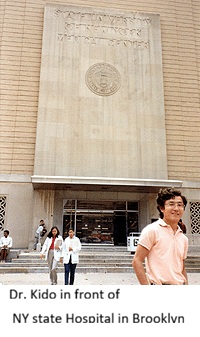
I spent three years, from 1980 to 1983, completing my residency at a hospital in Brooklyn, Fatman’s hometown. The overwork and accompanying sense of nihilism depicted in *House of God* perfectly matched this experience in Brooklyn. The most direct manifestation of these tendencies in behavior was likely the residents’ drug use. In every department, there was at least one or two residents with a drug addiction severe enough to require treatment. I also witnessed a tragic case involving a surgical resident who was found dead in the bathroom during his shift after a cocaine overdose. Consequently, I believe that residents of that era were surviving their daily lives by maintaining a precarious balance between their minds and bodies under the weight of overwork and stress.
Roy lashed out at the chief of internal medicine, accusing internal medicine specialists of inventing illnesses to make money. However, twenty years after the novel was written, “managed care”?the corporatization of healthcare?has taken root in the United States, and in a sense, this has become the reality of American healthcare.
(This section continues)
Note: Watergate Scandal: In June 1972, a group of five men working to secure the re-election of Republican President Nixon were arrested for attempting to plant listening devices at the Democratic Party headquarters in the Watergate Building in Washington, D.C. As the trial proceeded, the president’s involvement in the incident and the government’s excessive intelligence activities were exposed, revealing a series of scandals. As a result of this scandal, President Nixon resigned in 1974
References
1) Samuel Shem. The House of God. Dell Publishing, 1995
2)Brooklyn Memoire: https://www.carefriends.com/kido/newyork/english.html
There are two social issues that cannot be ignored when discussing the United States during this era. The first is that the Vietnam War, contrary to America’s initial expectations, turned into a quagmire, and the United States ultimately suffered defeat. The other was that President Nixon was forced to resign?the first time in U.S. history that a sitting president had to step down?due to the Watergate scandal (Note). The social climate brought about by these events, which dampened America’s vitality, likely included feelings of “helplessness,” “emptiness,” and “skepticism.”
*House of God*
Against the backdrop of this social climate in the U.S. at the time, the novel *House of God* was published in the late 1970s. This novel stands in stark contrast to the aforementioned nonfiction work *Intern* (See the part 1); it is pure fiction, peppered with irony, satire, and provocative language.It depicts the lives of residents at “House of God,” a top-tier teaching hospital in Boston, through the eyes of Roy, an intern (first-year resident). Roy’s first senior resident is Fatman. Fatman is a very pragmatic man from Brooklyn who teaches the first-year residents, including Roy, how to survive their hellish first year using realistic language.
For example, he refers to elderly patients with dementia as “GOMERs” (Get Out of My Emergency Room) and advises that the most important thing for a GOMER is “to do nothing! No tests, no treatment!” However, Joe, the female physician who became Roy’s senior resident after Fatman, is an outstanding graduate of Best Medical School (BMS), which has close ties to the House of God, and is a resident with a personality that is the exact opposite of Fatman’s. The English expression “obsessive-compulsive” fits her perfectly, though this term can also be used as a compliment for residents.
She insists that Roy perform tests for every issue?even with GOMERs?and treat them based on the results. As a result, all the GOMERs rapidly deteriorate. At a loss, Roy consults Fatman behind Joe’s back. Fatman suggests that Roy write in the chart that both tests and treatments were performed, but in reality, do nothing. When Roy follows Fatman’s advice, the GOMERs actually begin to recover their health to a reasonable degree. Unaware that he is being deceived, Joe is satisfied with the results and even goes so far as to recommend Roy for the title of top intern.
However, this scheme is eventually exposed, and Roy is summoned by the head of the Internal Medicine Department. The head lectures Roy, saying, “The mission of Internal Medicine is to identify diseases through testing and treat them accurately,” but Roy confronts the head head-on.
“Excuse me, sir, that’s not how it is in reality. They are creating diseases. And then they are treating the diseases they’ve created.”
“Why do they have to do such a thing?”
“It’s to make a profit,” Roy goes so far as to say this, but perhaps sensing a grain of truth in his argument, the head of Internal Medicine does not discipline Roy. This forms the climax of the first half, but the novel is a lengthy work in which such issues continue endlessly.
In addition to this, the book features an intern who takes mountains of tranquilizers before going on call, and another who commits suicide out of despair over a mistake in a patient’s treatment. There’s even a character who takes a female social worker as his mistress and goes so far as to prioritize the transfer of a GOMER patient.
The Savior, Fatman
This book, *House of God*, gained a reputation among fellow doctors starting in the late 1970s, and I myself read it during my residency in the early 1980s. Given the nature of its content, it drew considerable criticism, and for several months, the letters to the editor section of the *New England Journal of Medicine* was filled with heated debate. I recall searching for back issues of the journal here and reading about this controversy myself. Most of the objections were directed at the shameless terminology?starting with “GOMER”?and the residents’ immoral behavior. However, as becomes clear upon reading the novel closely, despite his radical words and actions, Fatman is a kind and skilled doctor who is actually beloved even by the very “GOMERs” themselves. Furthermore, even if somewhat exaggerated, it is certain that this work sharply highlights the contradictions of what was then considered the “world’s best American medical care.” It seems there were many who supported the novel with an understanding of these points. In the mid-1980s, after I had returned from the United States, the Japanese Society for Medical Education held a conference in Tokyo, where a renowned American professor gave a lecture on the U.S. residency system. Naturally, most of the lecture focused on the merits of the U.S. residency system. During the Q&A session, I asked a question from the floor. I cited *House of God* as an example and asked about the overwork of American residents and the accompanying tendency toward nihilism. The professor had read the book and agreed to some extent with this assessment. He even mentioned Fatman, going so far as to say, “The saving grace of this novel is the existence of Fatman.”
A Parody That’s No Laughing Matter
Now, since the “Best Medical School” (BMS) in this novel is a parody of Harvard Medical School (HMS), and “House of God” is the top hospital in its affiliates, it is likely a parody of Beth Israel Hospital (now Beth Israel-Deaconess Hospital). Speaking of parodies, the medical record falsification incident mentioned in the synopsis is likely a parody of the U.S. medical system’s obsession with meticulous record-keeping. Conversely, as long as the medical records are written in a presentable manner, one can even be recommended for the title of top resident.
Furthermore, the protagonist, Roy, always benefits from his impressive resume, which serves as a parody of the fact that the U.S. is a society that places even greater emphasis on resumes than is commonly known in Japan. The author, Samuel Shem, is a prodigy who graduated from Harvard College with honors, received a Rhodes Scholarship to study at Oxford, earned a Ph.D. in biology, and later graduated from HMS. He is currently a psychiatrist and writer, and also holds a faculty position at Harvard. Therefore, Roy in *House of God* is likely the author’s alter ego. In the novel, after a year as an internal medicine intern, Roy becomes disillusioned with the field and moves on to psychiatry. Samuel Shem was not only academically brilliant but was likely also a keenly perceptive and introspective individual. I imagine he wanted to expose the contradictions of the elite medical community in which he himself was immersed through the medium of fiction.
Since its first edition in the late 1970s, *House of God* has gone through numerous printings; the 1995 edition I recently acquired noted that cumulative sales had reached 2 million copies. The introduction to this book was written by none other than John Updike, a giant of American literature.
Survival Game
I spent three years, from 1980 to 1983, completing my residency at a hospital in Brooklyn, Fatman’s hometown. The overwork and accompanying sense of nihilism depicted in *House of God* perfectly matched this experience in Brooklyn. The most direct manifestation of these tendencies in behavior was likely the residents’ drug use. In every department, there was at least one or two residents with a drug addiction severe enough to require treatment. I also witnessed a tragic case involving a surgical resident who was found dead in the bathroom during his shift after a cocaine overdose. Consequently, I believe that residents of that era were surviving their daily lives by maintaining a precarious balance between their minds and bodies under the weight of overwork and stress.
Roy lashed out at the chief of internal medicine, accusing internal medicine specialists of inventing illnesses to make money. However, twenty years after the novel was written, “managed care”?the corporatization of healthcare?has taken root in the United States, and in a sense, this has become the reality of American healthcare.
(This section continues)
Note: Watergate Scandal: In June 1972, a group of five men working to secure the re-election of Republican President Nixon were arrested for attempting to plant listening devices at the Democratic Party headquarters in the Watergate Building in Washington, D.C. As the trial proceeded, the president’s involvement in the incident and the government’s excessive intelligence activities were exposed, revealing a series of scandals. As a result of this scandal, President Nixon resigned in 1974
References
1) Samuel Shem. The House of God. Dell Publishing, 1995
2)Brooklyn Memoire: https://www.carefriends.com/kido/newyork/english.html